
How to Replace Cat® Transmission Filters:
Step-by-Step
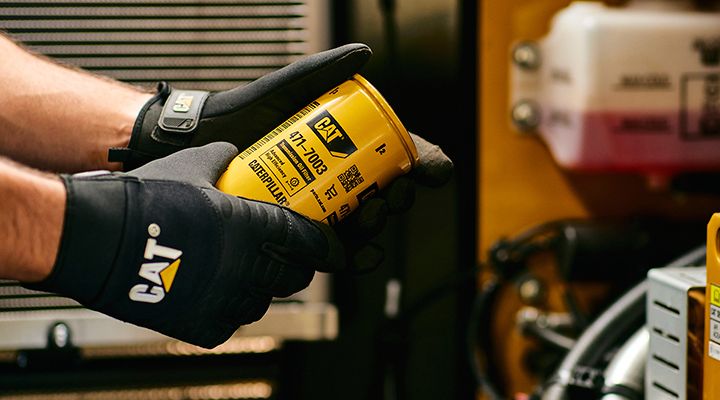
What: Cat transmission filter replacement removes contaminants from transmission oil to protect internal components.
When: Replace at scheduled service intervals, after overheating events, or when oil analysis indicates contamination.
Why It Matters: Clean oil maintains clutch control, hydraulic pressure, and transmission longevity.
A step‑by‑step replacement video is available below to visually guide the process.
Step 1: Prepare the Machine for Service
Park the machine on level ground, engage the parking brake, lower all implements, and allow the transmission oil to cool to a safe service temperature.
- Shut down the engine
- Relieve system pressure if required
- Wear appropriate PPE
Step 2: Clean the Filter Area
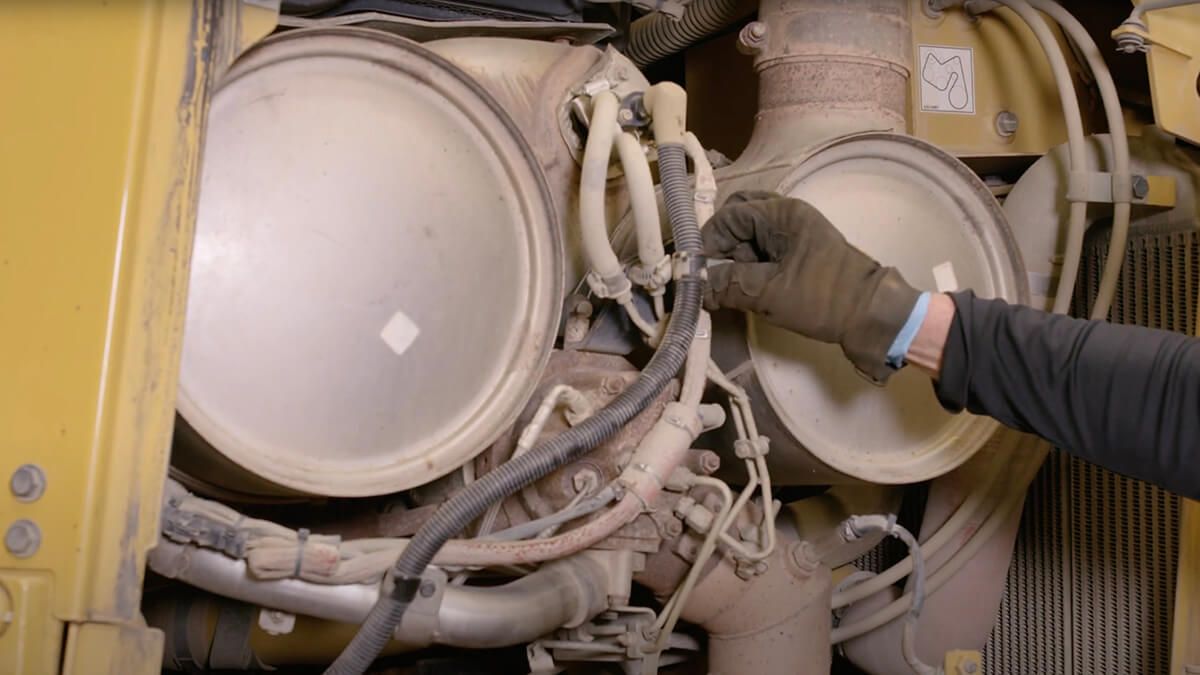
Clean the transmission filter housing and surrounding area thoroughly before removal.
- Remove dirt, grease, and debris
- Prevent contamination from entering the system
Cleanliness at this stage directly affects transmission life.
Step 3: Remove the Old Transmission Filter
Remove the existing transmission filter using the correct tool.
- Turn the filter counterclockwise
- Allow residual oil to drain into an approved container
- Inspect the filter sealing surface
Do not reuse old seals or gaskets.
Step 4: Inspect the Removed Filter
Inspect the old filter for signs of abnormal wear.
- Metal particles
- Clutch material
- Discolored or burnt oil
Document findings if part of an oil analysis or maintenance program.
Step 5: Prepare the New Cat Transmission Filter
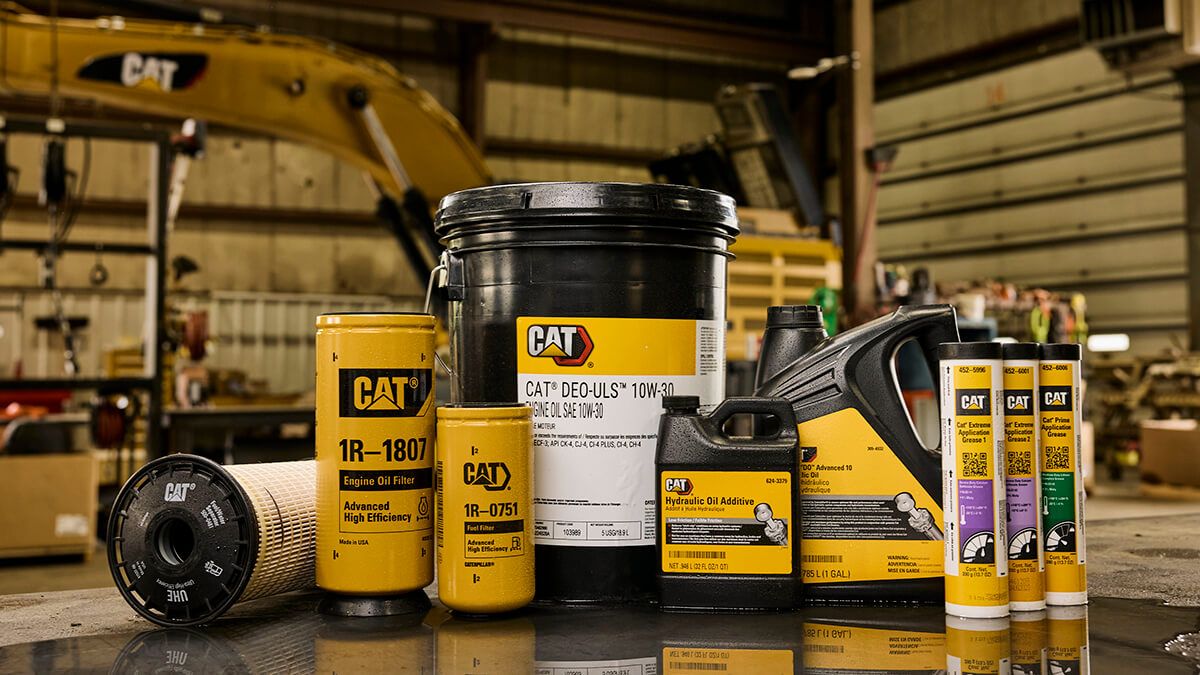
Prepare the replacement filter before installation.
- Verify the correct part number by serial number
- Lightly oil the gasket or seals with clean transmission oil
- Ensure the filter media and housing are undamaged
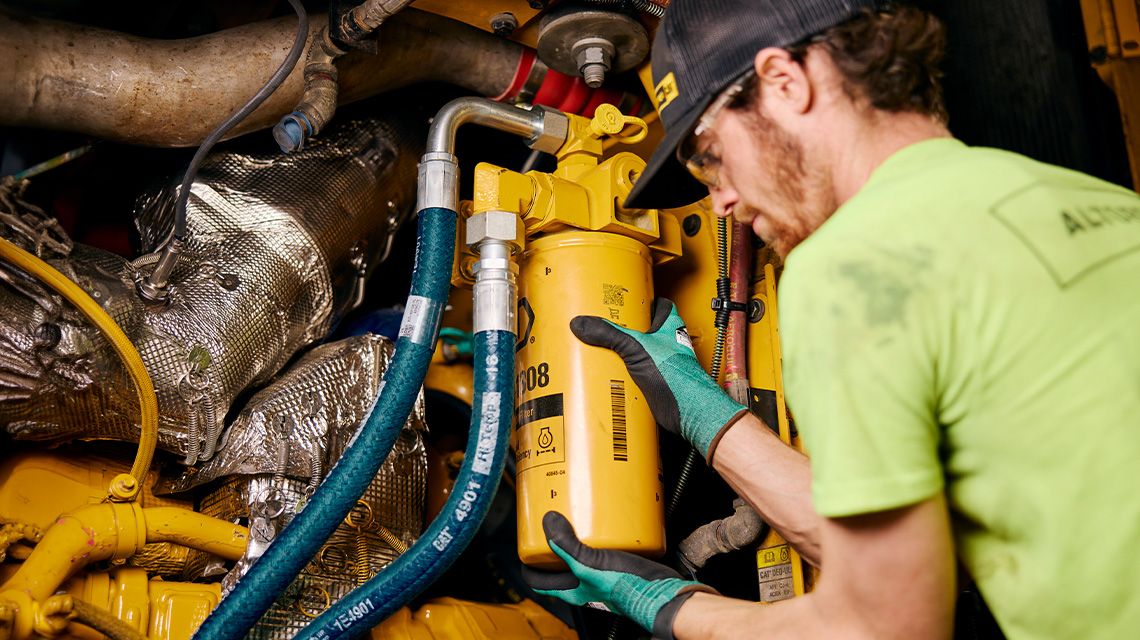
Step 6: Install the New Transmission Filter
Install the new filter according to the specification.
- Thread the filter on by hand
- Tighten to the OMM‑specified torque
- Do not overtighten
Improper torque can damage the housing or cause leaks.
Step 7: Refill and Verify Transmission Oil Level
Restore the correct oil level after filter replacement.
- Add approved transmission oil as required
- Start the engine and allow oil to circulate
- Check for leaks around the filter housing
- Recheck oil level and adjust if necessary
Step 8: Document the Service
Record the filter replacement.
- Service hours
- Filter part number
- Oil condition observations
Accurate records support oil analysis trends and maintenance planning.
How Often Should You Replace a Cat Transmission Filter?
Cat transmission filters should be replaced at intervals specified in the Operation & Maintenance Manual or sooner if operating conditions or oil analysis indicate contamination.
Typical Replacement Interval Triggers
- Scheduled service hours
- Transmission oil sampling results
- Overheating or abnormal shifting events
- Component repair or oil contamination
People Also Ask: Replacement Interval Guidance
- Severe duty applications may require shorter intervals
- High contamination environments increase replacement frequency
- Ignoring intervals can lead to restricted flow and bypass activation
Always base interval decisions on machine application and oil condition, not hours alone.
Why Does Proper Transmission Filter Replacement Matter?
Proper transmission filter replacement protects hydraulic pressure, clutch engagement, and internal component surfaces from abrasive wear.
Failure to replace filters on time can result in:
- Harsh or delayed shifting
- Elevated oil temperatures
- Accelerated clutch and pump wear
- Increased total cost of ownership
Transmission filters are a low‑cost service item that protect high‑value powertrain components.
Which Cat Machines Use Transmission Filters?
Most Cat machines with power‑shift or hydrostatic transmissions rely on dedicated transmission filtration systems.
Machine Compatibility
Common applications include:
- Dozers: D6, D8, D9
- Excavators: 336, 349
- Wheel Loaders: 950, 966, 980
- Motor Graders: 140, 150
- Articulated Trucks: 730, 740
- Other Cat Equipment Models
Always confirm the correct transmission filter by machine serial number.
Maintenance Checklist — Cat Transmission Filter Replacement
This checklist ensures consistent, contamination‑free service:
☐ Machine parked and secured
☐ Oil cooled to a safe temperature
☐ Area cleaned before filter removal
☐ Old filter inspected
☐ Correct Cat replacement filter verified
☐ Filter installed to proper torque
☐ Oil level verified after startup
☐ Service documented
Pro‑Tip from the Shop
Experienced technicians look for a fine metallic “sheen” in the filter housing, not just visible debris.
A metallic sheen often appears before oil analysis flags abnormal wear. Catching it early allows fleets to:
- Increase oil sampling frequency
- Monitor shift quality closely
- Plan inspections before secondary damage occurs
This visual check is a simple but powerful preventive practice.
Cat Transmission Filters Replacement FAQs
Do I have to change the Cat transmission filter?
Yes. Transmission filters must be changed to prevent contamination from circulating through the transmission, which can lead to clutch wear, pressure loss, and component failure.
How do I know when I need to replace the Cat transmission filter?
Replace the filter when:
- Scheduled service intervals are reached
- Oil analysis shows elevated wear metals
- Transmission performance changes
- Oil appears dark, burnt, or contaminated
When in doubt, follow the OMM or consult oil sample results.
Final Takeaway
Replacing Cat transmission filters using a clear, step‑by‑step process protects transmission performance, reduces wear, and helps fleets avoid costly powertrain repairs. Proper filter service remains one of the most effective preventive maintenance actions in the field.
Your Business
 North America – English
Caterpillar Brands
- Caterpillar.com
- Contact Us
- My Marketing Preferences
- Site Map
- Cookie Settings
- Legal
- Privacy
- Do Not Sell or Share My Personal Information
- Accessibility Statement
- US-English
- © 2026 Caterpillar. All Rights Reserved.