
Avoiding Hydraulic Hose Failure: Inspections, QR Codes
Estimated read time: 5 minutes
Excavators, bulldozers, skid steer loaders, track loaders and other hard-working machines all share a common vulnerability. Their reliability depends on hydraulics, a system connected by hose assemblies that carry fluid to where the work gets done.
Without regular maintenance and inspection, hose assemblies can get damaged or even rupture. A hydraulic fluid leak or spill can endanger personnel and the surrounding environment.
Equipment owners can take preventive steps to protect hydraulic systems and assemblies. With our tips for inspection and the bonus benefits of Cat® hydraulic hose QR codes, you will be set up for maintenance and repair before failure.
Avoid Unexpected Failures. Make Hydraulic System Inspection A Habit.
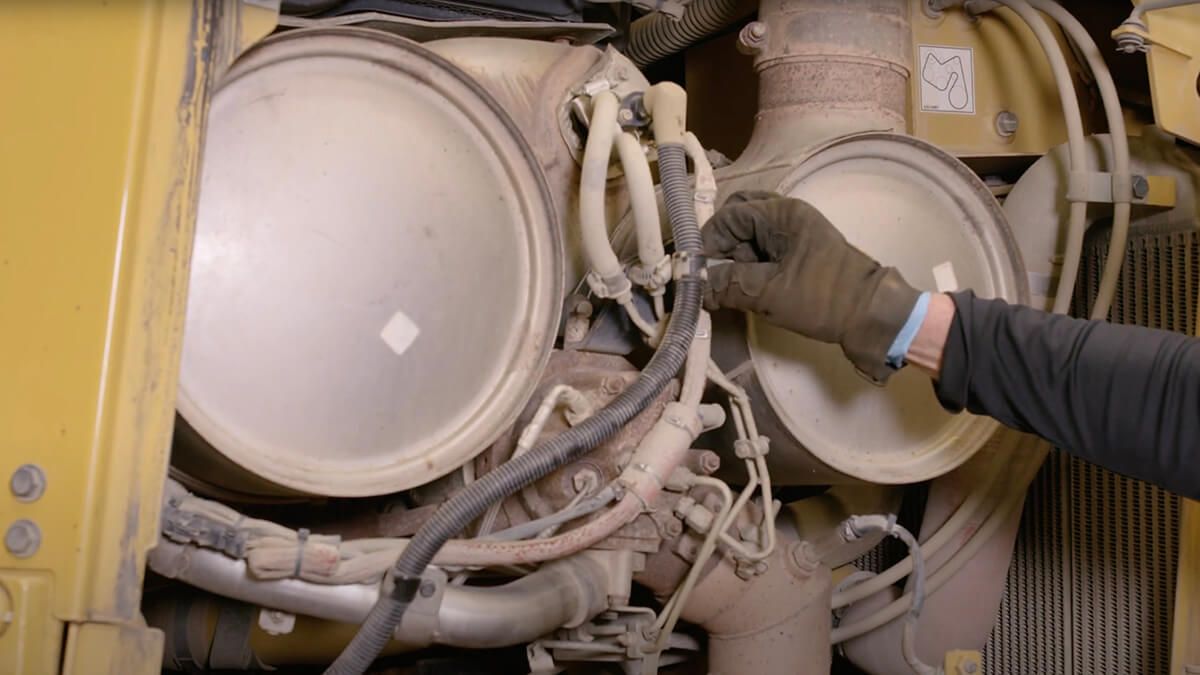
An excellent way to avoid unexpected failures is to regularly check for warning signs. Visually inspect hoses for cracks, abrasions, bulges, and leaks to detect early signs of wear. Regular inspections using tools like Cat Inspect help detect wear before failure occurs. In addition to visually inspecting your hydraulic system, you'll also need to listen to it. Sounds can be clues that warn you ahead of a potential issue. Here’s a quick hydraulic inspection checklist:
Before you get started, remember to check your Operation and Maintenance Manual (OMM) for proper safety procedures, and always wear appropriate personal protective equipment (PPE).
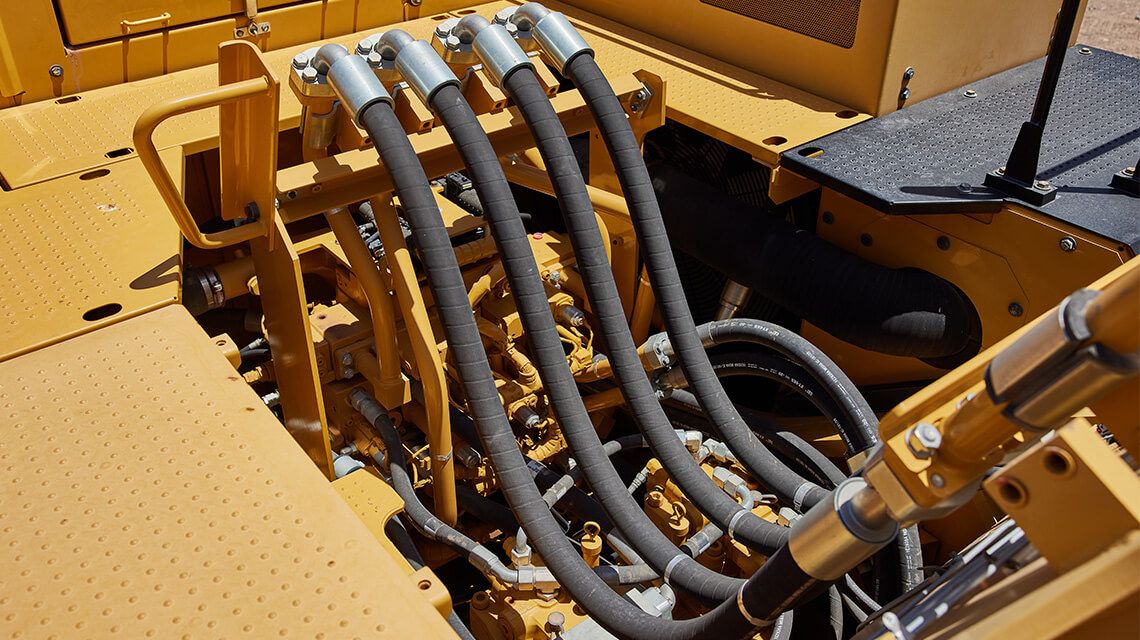
- Move your machine to a dry, level surface. Lower implements to the ground.
With the engine still running, listen carefully for noises like whining and grinding. These sounds could indicate pump cavitation or a loose or failed bearing.
Next, shut down the machine and turn the key to the on position. Move the levers back and forth to release hydraulic pressure. Before continuing your inspection, make sure components have had time to cool off.
As you walk around the machine, check sight gauges to see if you need to add any fluids.
Look around the steering and brake valves for leaks and damaged hoses. Also look for leaks and damage in the hydraulic pump area.
Note any loose or damaged hose clamps and tighten or replace them.
Inspect the oil cooler and condenser lines for leaks around connections and for worn hoses. And make sure the fan motor connection points are free of leaks.
Leaks may not be obvious around the lift and tilt cylinders. Instead, you might see dirt build up around seals. Look around for damage to cylinder rods, linkage pins or joints.
If you find any issues, remember that you can order everything you need at Parts.Cat.com. This is also where you can find Self-Service Options (SSO). SSOs provide detailed service instructions and recommended parts and tooling so you can feel confident you’re doing it right.
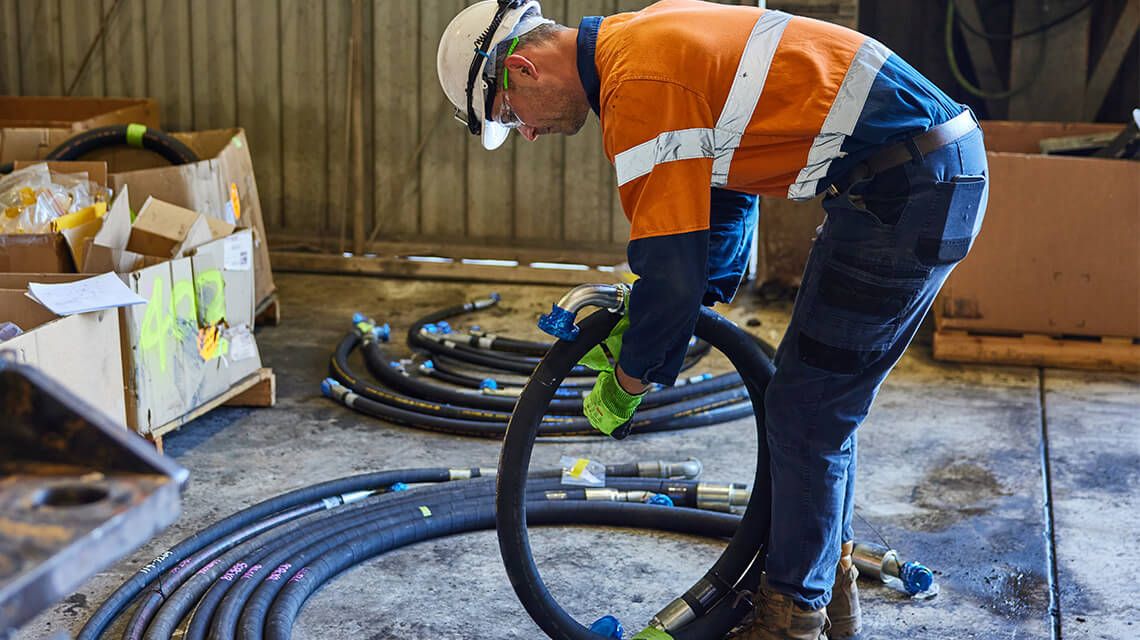
Can I Do My Own Hydraulic Hose Repairs or Installation?
It's possible but requires careful work. Success depends on using the right parts, routing the assembly properly, following contamination-control best practices, and carefully verifying the repair before returning to work.
One often-overlooked step when replacing or repairing hydraulic lines is capping any hose ends you disconnect. Leaving them open, even briefly, creates an easy path for contamination of all sizes, which can compromise your system.
Caution: Hydraulic systems can remain pressurized after shutdown. Always relieve pressure per the OMM and follow lockout/tagout. High-pressure fluid can cause serious injection injury. Seek medical attention immediately if exposed.
Use QR Codes On Your Hose Label To Help Save Time And Money
Every hose on your Cat equipment has a label that features two helpful QR codes. These labels give you an easy way to be proactive about hose maintenance. Scanning these labels with your smart device will help you record hose conditions, generate predictive health reports, understand when it is time to buy a replacement and purchase the new hose. Here’s how:
Scan-To-Manage
During machine inspections, recording observations and evaluating hose conditions allows you to analyze trends in the hose lifecycle. All you need to do is use the Cat Inspect app to scan the tracking ID code on the bottom of the label and input notes, photos and other data related to the condition of the hose. By staying on top of your hose lifecycle, you can reduce downtime, save on costly repairs and enhance your machine’s efficiency.
Scan-To-Buy
Spotting a potential problem during your daily machine walk-around helps you reduce unplanned downtime and expenses. Ordering the right hose for your machine is easy with the shopping QR code on the hose label. Look for the code with the shopping cart icon, then use your smart device’s camera to scan the code, taking you directly to the part number page on Parts.Cat.com. You will save time and hassle and will know that you are getting the right hose for your machine every time.
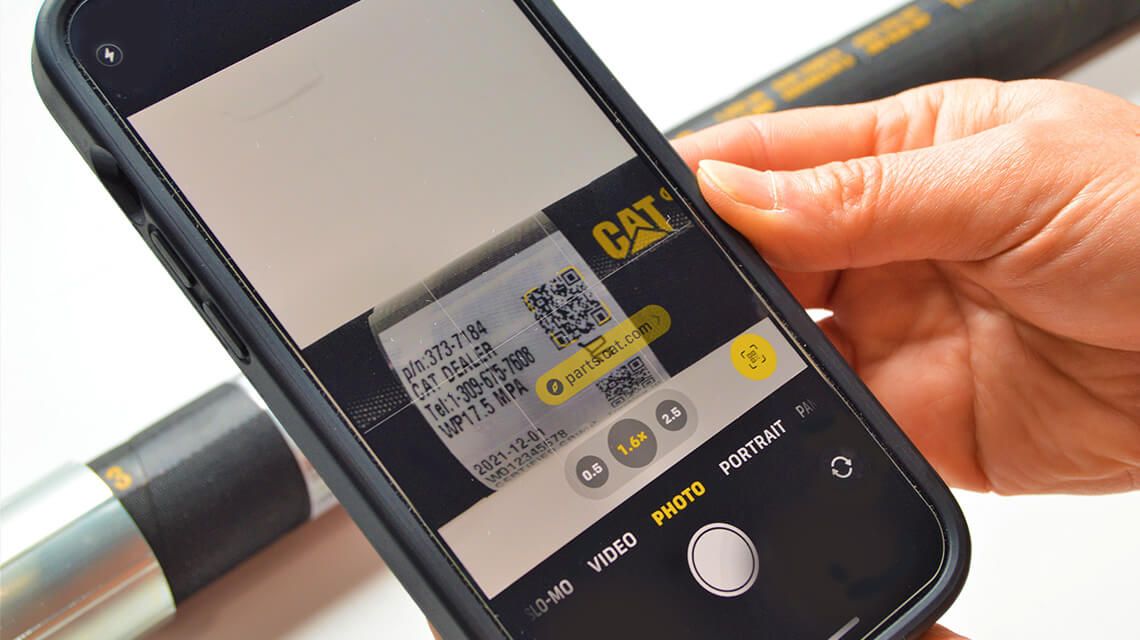
QR Codes Can Boost Your Bottom Line
Using the QR codes on your hose labels can add to efficiency and reduce costs. All you need is your smart device to take advantage of these benefits:
Order Replacement Parts Easily. Quickly scan the QR code on your hose and order the exact replacement part you need.
Get The Right Part Every Time. Take the guesswork out of equipment management and order the right replacement part every time.
Increase Uptime, Get Replacement Before Failure. Save time and hassle by ordering the replacement hose while the machine continues to work with no immediate loss of revenue.
Improve Operational Efficiency. Should a hose fail, you can get back to work quickly by ordering the replacement hose before leaving your jobsite.
Reduce Overall Maintenance Costs. Keep your equipment running at peak performance while reducing costs associated with emergency repairs and unscheduled downtime.
For more information, talk to your Cat dealer or buy hoses and couplings at Parts.Cat.com.
Q: Can hydraulic hoses be repaired?
A: No. The hose assembly should be replaced with a new one in case of wear, leaks or any signs of damage.
Q: Why do hydraulic hoses fail?
A: Common causes include abrasion, improper installation, high-pressure surges, contamination and incorrect assembly.
Q: Where to buy hydraulic hoses?
A: Genuine Cat® hydraulic hoses and couplings are available through Cat dealers and Parts.Cat.com.
Q: What are the benefits of QR codes on hoses?
A: QR codes let you track hose condition, order replacements instantly and manage lifecycle data with tools like Cat Inspect.
Your Business
 North America – English
Caterpillar Brands
- Caterpillar.com
- My Marketing Preferences
- Site Map
- Cookie Settings
- Legal
- Privacy
- Do Not Sell or Share My Personal Information
- Accessibility Statement
- US-English
- © 2026 Caterpillar. All Rights Reserved.