
Scale Studies Help Mining Companies Maximize Payload
Learn more about how scale studies can help to optimize loading and hauling operations
By Caterpillar | Posted February 28, 2023
Mining companies know there are dozens of things they can do to optimize their operations — recognizing that even the slightest improvements can reap great benefits. The more productively, efficiently and cost-effectively they operate, the lower their costs and the less impact they have on the environment.
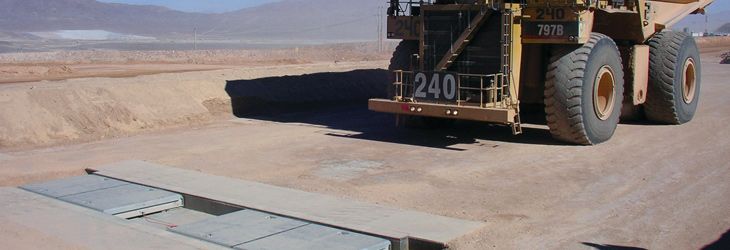
A number of mines are working with Caterpillar and Cat dealers to take advantage of the improvements that scale studies can make to their loading and hauling operations. Scale studies use truck scales and LiDAR bed scanners to help optimize empty machine weight, reduce carryback and ensure maximum payload.
Every truck has a target payload. When that payload is not being measured, it’s possible that the truck is not carrying the rated payload in every cycle. At the same time, overloading trucks can cause structural damage, increase fuel burn, reduce component life and negatively impact tire life.
Caterpillar uses a 10/10/20 policy — recommending that no more than 10 percent of loads are over 110 percent of target payload and never exceed 120 percent. The mean of the payloads should not exceed the target payload.
Whether they are permanent fixtures or temporary installations for a one-time study, scales help make it possible for mines to lower their costs in a number of ways. Scales can help mine sites:
- Maximize payload and increase production. If you’re not getting the maximum load in every cycle, you’re leaving money on the table. And depending on the commodity you’re hauling, that can be a significant loss. It’s vital that you accurately measure your payload.
- Validate onboard payload management systems. Onboard tools that track loads, cycle times and payload data are only valuable if they are correctly validated and calibrated to ensure correct reporting.
- Improve the return on investment for a truck fleet. Enabling target payloads to be determined and managed across the truck fleet delivers increased production and reduces operating costs.
- Increase operational efficiencies. Overloaded trucks are tough on site conditions, taking a toll on haul road services and reducing efficiency of the mobile fleet.
- Reduce fuel usage and lessen carbon footprint. A fully loaded truck moves the maximum amount of material per load, which translates into less fuel burned per ton. Even small changes make a big impact. For example, a 1% change in weight or payload can result in up to 1% lower CO2 emissions per ton.
- Decrease overall operating costs
- Reduce maintenance costs. Excess payload stresses truck frames and components, which can lead to costly repairs and unplanned maintenance.
- Extend the lives of equipment, components and tires. Overloading a truck causes additional wear, which can result in premature failure.
GET THE LATEST FROM CATERPILLAR MINING DELIVERED RIGHT TO YOUR INBOX
STAY IN TOUCH WITH CATERPILLAR MINING
FOLLOW CAT MINING
Your Business


Caterpillar Brands
- Caterpillar.com
- My Marketing Preferences
- Site Map
- Cookie Settings
- Legal
- Privacy
- Do Not Sell or Share My Personal Information
- Accessibility Statement
- US-English
- © 2026 Caterpillar. All Rights Reserved.