00:00:02 Narrator
This episode of the Energy Pipeline is sponsored by Caterpillar Oil and gas. Since the 1930s, Caterpillar has manufactured engines for drilling, production, well service and gas compression. With more than 2100 dealer locations worldwide, Caterpillar offers customers a dedicated support team to assist with their premier power solutions.
00:00:28 Narrator
Welcome to the Energy Pipeline podcast with your host, Russell Stewart. Tune in each week to learn more about industry issues, tools and resources to streamline and modernize the future of the industry. Whether you work in oil and gas or bring a unique perspective, this podcast is your knowledge transfer hub. Welcome to the Energy Pipeline.
00:00:52 Russell Stewart
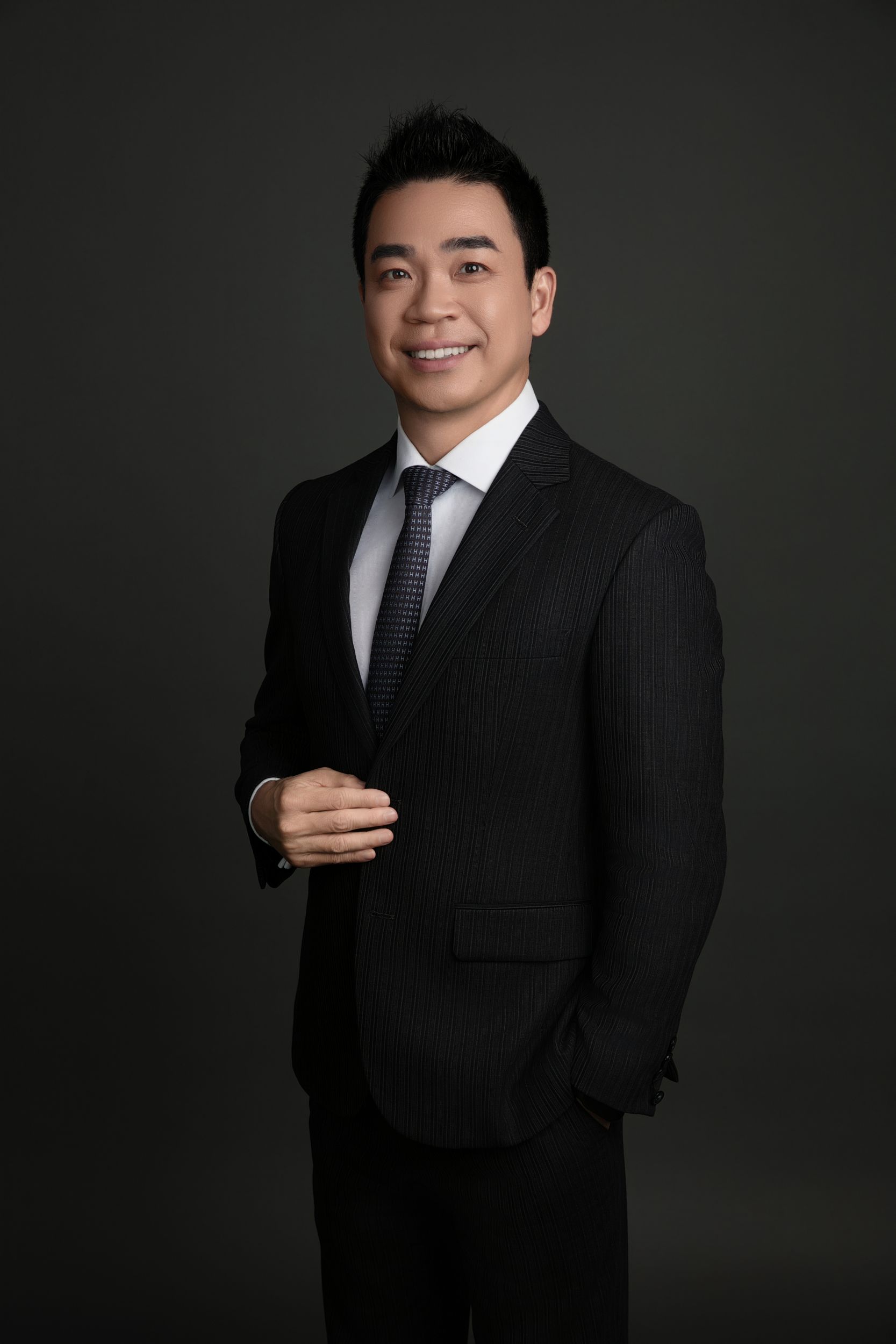
Hey everybody. As always, thanks for listening and thanks to Caterpillar Oil and Gas for making this podcast possible today. My guest on the show, we're going to go international today. So I'm excited about that today. My guest on the show is Kelvin Teo. Kelvin is the managing director for PKR Offshore out of Taiwan. Kelvin, thanks for coming on the show today.
00:01:19 Kelvin Teo
Hi everyone. It's a pleasure to be invited for the show. Well, nice to meet everyone.
00:01:25 Russell Stewart
The pleasure is all mine and Caterpillar was really excited about having you come on there podcast and we'll talk about the reasons for that here in just a minute. But first of all, Kevin, tell me about yourself. Am I talking to you in Taiwan right now?
00:01:42 Kelvin Teo
Yes, I'm in Taiwan in Taipei right now. I'm actually from Singapore, but I think fate has brought me to this lovely city, Taipei, and I've been living here for the past. Coming close to six years. Yeah.
00:01:59 Russell Stewart
Okay.
00:01:59 Kelvin Teo
Right now. Yeah. And I, I remember that, you know, when I first moved here, it was the, it was the start of the COVID and the whole went to shut down and, and since then of course, you know, that started my first experience in this lovely place. And time flies. It's been six years. Yeah. By now.
00:02:19 Russell Stewart
Oh, that's great. Okay, so PKR Offshore, what is that?
00:02:26 Kelvin Teo
Yep. Okay. We, it's actually a startup that, you know, when we first came to Taiwan to start this company that was 2018 where the parent company is a company called Porsche. And we went to a joint venture with another company in Taiwan that's called Carriage Logistics. And we decided to fund this joint venture for the offshore wind business. And the it basically stands for back then Porsche, Carry Renewable and in short, pkr. So we call it PKR Offshore, where we are vessel owner, vessel operator specializing in the offshore wind industry in Taiwan.
00:03:12 Russell Stewart
Okay, so, so we're talking about offshore wind. Let's talk about the wind industry in Asia Pacific. You guys are in Taiwan. But you've also moved into Japan and Korea, right?
00:03:35 Kelvin Teo
Yes, that's right, Yeah. I mean, Taiwan has been our base, our home base for the past six years as you come in seven since 2018. And of course, we, we have been very, very active in Taiwan, serving all the major offshore wind customers since day one. And I think we have successfully built up a good team, a good track record, and we see that Taiwan will continue to be one of the leading player in Asia Pacific in the near future too. But of course, you know, we are also seeing neighboring countries like Japan and Korea, which have been accelerating their own energy transitions. So we feel that it's time that we bring our experience and know how into this new markets so that we can provide the same safe, reliable and sustainable offshore special services to our wind customers.
00:04:41 Russell Stewart
And you see a big expansion of that in Asia Pacific, is that right?
00:04:49 Kelvin Teo
Yes, that's right. Yeah, we see a huge potential in the whole of Asia Pacific.
00:04:56 Russell Stewart
Okay, so you guys are involved in or it's ongoing, or are you, you built a, what you call the MP Wind archer, is that right?
00:05:10 Kelvin Teo
Yes, that's right. Yeah. So, so if you, if you look at the, the growth in the APEC Asia Pacific market, we see that the, one of the key challenges that's faced by our customers is the huge shortage of suitable offshore offshore vessels that's required to support the construction of the wind farm. So in Asia, we find that this situation is even more challenging due to the various local carbon touch regulations, which basically restrict the foreign vessels from working locally, unlike in Europe where it's a common market. So for us, we feel that if we're able to replicate our model in Taiwan across the APEC region, by investing in new vessels forming the local partnership, we will be able to build a more resilient supply chain that we will be able to scale up rapidly to meet this, the requirement by our customers. And that is also one of the main reason why we decide to move on to build our very first npv. Nurture, which is a csov, is used as a commissioning service, operation vessel and itself. This is a very sophisticated vessel that is the first CSOV to be designed and built in Asia for the Asia market.
00:06:51 Russell Stewart
Okay, so you use this term, csov, what does that acronym stand for?
00:06:56 Kelvin Teo
Yeah, it basically stands for the commissioning service, operation vessel. So for this kind of vessel, it is used for the commissioning of the turbine and customers will use it to be stationed in a wind farm for as long as up to 30 days where there are technicians will be staying on Board the vessel and working on the turbine on a daily basis. And the vention will be transferred from the vessel to the turbine via the specialized gangway that we have on board the vessel. So it's basically used during the commissioning period of the wind farm.
00:07:40 Russell Stewart
Okay, so I did a little research that. These CSOVs, these are battery hybrids, is that right?
00:07:50 Kelvin Teo
Yes, that's right. Yeah. So I think, you know, one of the reasons, or rather when we look at the design of this vessel, we're looking at a few different key factors. We wanted the vessel, you know, to be environmentally, you know, responsible, you know, so I think having the hybrid propulsion, it definitely reduce the greenhouse gas emissions which align it with our own decarbonization goals. The operational efficiency is also very critical because end of the day the battery will support optimized engine load. It cuts down the fuel consumption and enhance the redundancy. And the third point is that we also want it to be future proofing. So the hybrid system itself is a practical steps towards a full alternative fuel adoption in future. You know, giving us the flexibility has the new fuels and regulation emerge. So I think in short, you know, our decision to go for this high P proportion was the right choice because it balances, you know, the immediate environmental benefit with the long term adaptability.
00:09:13 Russell Stewart
And so to do this, you guys, and this is the reason Caterpillar wanted to have you on the podcast. You guys have collaborated with, I think Caterpillar Marine and also Capital Machinery Limited. What influenced you to have that collaboration and how has that helped you succeed with this fleet expansion and operational reliability?
00:09:45 Kelvin Teo
Yeah, I think in our business model we value a lot on partnerships, especially when it comes to the fleet expansions. So for Caterpillar Marine, they bring their world class engineering, the hybrid ready systems and the reliability in terms of services to us. While the Capital Machinery Ltd. CML, in short, which is the local agency in the town itself, they provide us with the strong local technical support and service continuity. So as a vessel operator, you know, one of the key thing is that we always need to minimize the downtime of our vessel operation. So working closely with the cml, it allows the key spare parts of the vessel to be stocked at their local facilities in Taiwan. And this item could be delivered within a very, very short period of time to our vessel, reducing downtime in case of any potential issues. So I think to date we have also been very grateful for the experience of technicians that they have provided. So whenever there's any issues, you know, we do see that we get a support Very strong support from the CML who are able to attend to any urgent technical issues which optimize our vessel uptime. So I think together both the Caterpillar Marines and their local partner CML in Taiwan, they are able to ensure that our vessel not only perform at peak efficiency, but also benefit from their responsive after sale support. And I think this collaboration is very critical for vessel owners because for us it means overall reduction in the downtime, improving the safety and it basically instills confidence in our clients that we will be able to deliver consistent and reliable vessel solution to them.
00:12:02 Russell Stewart
Okay, so let's talk some more about this MP Wind Archer. Exactly what is that?
00:12:11 Kelvin Teo
Yeah, so MP Vrcher. I mean the way we name the vessel, of course, MP stands for the Makapolo. So Makapolu is actually our new parent company that bought over PKR Ocean some three years ago from the previous owner. So all the vessels, the new vessels that we have are named after the MP series. So the very first CSOV that we have, yep, we followed the convention MP and it's called MP Win Archer. So even for the new CS ctd which is the crew transfer vessel that we have bought this year, are also named after the MP name series.
00:13:01 Russell Stewart
And the idea behind the MP wind archer and new CTVs, the these are actually designed to support what you talked about a while ago, climate related objectives. So how does that work? How do these vessels help PKR Offshore meet decarbonization targets and does it also reduce fuel costs?
00:13:27 Kelvin Teo
Yep, that's right. So for the MP Wind Archer and the new CTD for us this year, basically they were designed with sustainability at their core. So this 3512E from Caterpillar which was installed on our CSOV, the MP win archer is basically engineered to promote greater fuel efficiency and reduce carbon emission. And for the three new CTV which we have purchased earlier this year, they were each equipped with the dual Caterpillar C32 engine, delivering dependable power and fuel efficiency. So I think overall these new vessels, they have definitely helped us to meet our decarbonization goal by reducing the overall emissions, lowering the fuel cost by optimizing the engine load and having the battery assisted operation, which translates into the rail cost saving for customers. And of course, last but not least, also they enable the greener operations. So by meeting the international environmental standards, the vessels have helped our customers, who are the waveform developers, to achieve their own sustainability reporting targets. So this way, I think for PKR Offshore as a whole, we are not only decarbonizing our own operations, but we are also enabling greener offshore wind projects across the region.
00:15:10 Russell Stewart
Okay. And so speaking of those projects, and we talked about you guys expanding from Taiwan into Japan and Korea and the offshore wind industry in the Asia Pacific, you guys expanded into that because you see that offshore wind industry is becoming something significant in Asia Pacific. But there's kind of a shortage of CSOVs, is that right? And that's why you guys are positioning yourself to meet that demand. Talk about that.
00:15:53 Kelvin Teo
Yes, that's right. You're absolutely correct. You know, because we do see that there's a huge shortage of such vessels this year, sov and this shortage is likely to continue to persist in the, in the future. So we are now looking ahead, you know, to prepare ourselves for more versatile and multifunctional vessel in terms of our fleet expansion. And by having such vessels which are more versatile, this will be able to better support the entire life cycle in the wind farm for customers. So in fact, we have just announced recently that we will be embarking on our second csov, which we call it the CSOV plus. So this will be capable of supporting the complete life cycle of offshore wing project from the construction and cable installation to repairs, maintenance and technician transfer for decommissioning and ONM operations. So the idea is that by integrating this advanced wind farm support with other proven oil and gas related capability, we want to deliver a more robust vessel solution that will be able to serve our customers across multiple sector while maximizing the operational uptime and providing significant competitive advantage. So of course this new CSOV plus we also have a hybrid propulsion system which will help to reduce the carbon emissions, similar to our existing csov, the MP Winarcha. And in addition, we are also currently busy preparing for upcoming IPO plans in Thailand which is scheduled for sometime third quarter or fourth quarter next year. So this will help to further unlock new capital to fund our fleet expansion to serve the fast growing offshore wind energy market in Taiwan and the APEC region and also to create further a platform for us to continue to expand in the new markets.
00:18:21 Russell Stewart
Well, that sounds very exciting, Kelvin. You're doing such a good job here. I had written down a question and the question was looking ahead, what role do you see hybrid and alternative fuel technologies playing in PKR Offshores future fleet development and regional growth strategy? And you just answered that question. So I want to talk, I want to dive a little deeper into hybrid propulsion, talk about that and exactly how does that work?
00:18:59 Kelvin Teo
Yeah, so I think, you know, at the end of the day we see hybrid and the alternative fuel technology as central to our company's future. So in the near term, hybrid propulsion gives us tangible emission reduction and cost benefit. Over the longer term, we are also actively studying the development and the feasibility of alternative fuel like methanol and ammonia. So one example is our collaboration with the New York based MOG where we have signed MOU previously to explore the possible adoption of the ammonia to power system on our new offshore winds in the future, subject to the effectiveness studies. So as you're all aware, I think the actual speed of adoption of all this alternative fuel technology, it will need the close collaboration amongst all key stakeholders in the industry, namely the government, developers, vessel owners and engine manufacturers. So if the vessel operates frequently in different wind farms and countries, she might encounter challenges in obtaining suitable fuel supply in some of the places. So overall I think our strategy is to remain robust and adaptable where we design vessels today that can be upgraded tomorrow. So this will position the company. Pshaw. To be able to continue to grow responsibly across APAC and ensuring that our fleet not only powers the offshore wind expansion, but also contributes meaningfully to global decarbonization efforts.
00:21:11 Russell Stewart
Well, again, that's very exciting. And Kelvin, I want to again say thanks for coming on the podcast and giving me the opportunity to let you share this information. And as you guys continue to successfully expand, we really appreciate your collaboration with Caterpillar Marine. I guess I got to ask one other question. You're in the Asia Pacific offshore wind industry. Any plans to expand anywhere else?
00:21:58 Kelvin Teo
Yes, I think, I guess we are always on the lookout for suitable opportunity. That's why we do make a couple of trips to Europe, for example, you know, a couple of times a year to meet up with the some of our key customers in Europe and also to explore, you know, with, I mean, suitable opportunity with the potential business partner. So I think if the right opportunity comes along for us to venture out of APAC regions to work with a like minded partner in Europe or other places, we are open to it and we're always willing to look at it more and to discuss further.
00:22:49 Russell Stewart
Oh, that sounds great. Well, you ever get to Houston?
00:22:56 Kelvin Teo
Yes, actually I used to go to Houston pretty often in the oil and gas days. Yeah, but it's been a while since I went to Houston.
00:23:06 Russell Stewart
All right, well the next time you come, we'll have to go grab lunch or something.
00:23:12 Kelvin Teo
Sounds great. Yes, I will definitely look forward to it.
00:23:15 Russell Stewart
Okay. Well Kevin, it was definitely a pleasure to talk to you again. Thanks for coming on the show. And as always, everybody out there. Thanks for listening. Post us on LinkedIn. Tell your friends to listen to us, leave us reviews and we'll see you next time on the Energy Pipeline Podcast.
00:23:33 E
Thanks for listening. Listening to oggn, the world's largest and most listened to podcast network for the oil and energy industry. If you like this show, leave us a review and then go to oggn.com to learn about all our other shows. And don't forget to sign up for our weekly newsletter. This show has been a production of the oil and gas.