
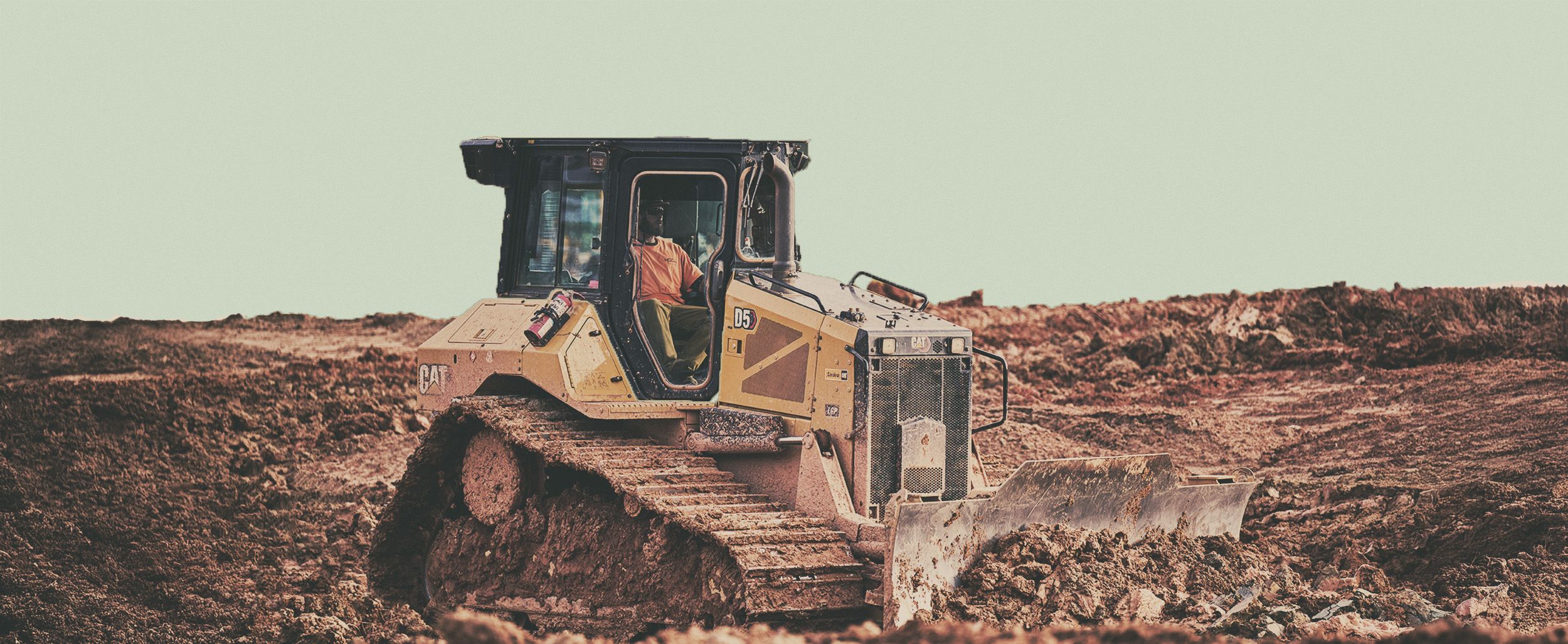
Dozer Undercarriage 101
Match Your Conditions. Control Your Costs. Protect Your Uptime.
A Simple Guide To The System That Carries Your Productivity
Some people judge a dozer by what’s above the tracks: horsepower, blade setups, tech packages. But ask any seasoned fleet manager where the real money is, and you’ll hear the same thing every time: the undercarriage is where your costs live or die.
Because undercarriage can account for up to half of a dozer’s owning and operating costs, it should be high on your list when you’re comparing models or spec’ing your next machine. Overlooking it during the buying process is an expensive mistake.
Here’s a straightforward breakdown of what matters, why it matters and how to choose the right dozer undercarriage for your jobs.
Three Factors That Make Or Break Dozer Undercarriage Life
Every jobsite puts different demands on a dozer. Some are abrasive. Some are rocky. Some pack material into every crevice of your track. Because your undercarriage meets all of it head on, choosing the right system is critical.
Here are the three factors that should guide your selection:
- Material type — whether you’re working in fine sand, sharp aggregate, frozen ground or heavy clay
- Impact level — light grading versus hard pushing, ripping or constant contact with rock
- Hours — the daily run time that turns normal wear into accelerated wear
When the undercarriage doesn’t match the realities of your site, components wear out early and costs add up fast. Choose the system built for your material, impact and hours, and you’ll see longer life, steadier uptime and far fewer surprises.
Caterpillar builds different undercarriage systems for different job conditions. Once you know your material, impact and hours, here's how to match them to the right setup.
For Reliable Everyday Performance, Opt For General Duty
For most environments and applications, General Duty is the dependable, cost-effective choice. It’s a smart fit for contractors who need solid performance without paying for features that aren't required on most jobs.
- Typical life is up to 4,000 hours in the right materials.
- Upfront cost is the lowest in the Cat® dozer undercarriage lineup.
- Ability to turn the bushings helps you extend life and reduce operating costs.
If your work involves spreading, backfilling, cleanup or routine grading, General Duty often delivers everything you require without tying up unnecessary budget.
When Impact And Hours Run High, Go With HDXL With Duralink™
If you’re in moderate- to high-impact conditions — rock, hard cuts, long production pushes — Heavy Duty Extended Life (HDXL) with Duralink™ is built to stand up to the abuse. It’s engineered to absorb impact and protect your pins, bushings and links from the kind of stress that accelerates wear.
- Life can be up to 50% longer than General Duty in harsh materials.
- Advanced Duralink design spreads loads for greater durability.
- Improved pin and bushing retention reduces internal wear.
- XL coating helps extend seal life and protect against corrosion.
If your dozer spends its days in tough conditions, HDXL with Duralink gives you the durability you need to control wear, reduce downtime and stay ahead of costly repairs.
In Fine, Abrasive Materials, Count On Cat® Abrasion
Some jobsites don’t hit your undercarriage with heavy impact — they wear it down through constant abrasion. Fine sand, slag, quarry screenings and other small, loose material can grind away at seals, bushings and links faster than you expect. That’s where Cat Abrasion™ is the better fit.
- Life can be up to 50% longer than General Duty in high-abrasion, low-to-medium-impact conditions.
- Reusable idlers and sprocket segments (no bushing turns required) help lower maintenance costs.
- A stronger sealing system — XL coating, redesigned seals and load rings, and a tougher thrust ring — reduces wear and oil loss even in harsh conditions.
If your dozer spends most of its time in fine or highly abrasive material, Cat Abrasion is engineered to handle that kind of wear and keep you ahead of unexpected repairs.
The Daily Habit That Saves Undercarriage Dollars
If there’s one habit that pays off fast, it’s this: check your track tension. A quick daily adjustment makes a bigger difference than most operators expect.
Field studies show that about 20% of track chains run too tight, and that mistake alone can accelerate wear dramatically. It loads the pins, bushings and seals until they fail early. Track that's too loose is problematic, too. It can lead to shock loads, derailments and accelerated wear patterns.
Bottom line: keep track tension in spec and you can cut dozer undercarriage wear by up to 50% — a huge return for a few minutes of routine maintenance.
A tape measure, a grease gun and a quick walkaround can go a long way toward protecting the most expensive system on your dozer.
Not Sure Which System Fits Your Site? We Can Help.
Choosing the right dozer undercarriage starts with understanding the kind of work you do most — material, impact and hours — and aligning that with a system built for those conditions.
You don't need to make the decision on your own. Your local Cat dealer can walk you through the options, look at your site conditions and match your dozer with the most cost-effective undercarriage for your operation.
*Applies to common repairs. Contact your local Cat dealer for major repair commitment and Terms & Conditions.
Related Articles
You’re here to get ideas to grow your business. Read on for machine insights and expert tips and tricks to get more out of every job.
-
How to Build a Dozer
The decisions you make BEFORE you put a dozer on a job site will have a profound effect on the machine’s performance, efficiency and ultimate value.
Learn More -
Rolling Resistance Factors
You can use rolling resistance factors to help you identify which equipment will be most efficient on your worksite.
Learn More -
Who says Blades are Boring?
Today’s dozer blades are sophisticated tools. And you can’t make money without them—which makes them far from boring. So before you choose a blade, give some thought to how the decision could affect your bottom line.
Learn More
Your Business
 North America – English
Caterpillar Brands
- Caterpillar.com
- Contact Us
- My Marketing Preferences
- Site Map
- Cookie Settings
- Legal
- Privacy
- Do Not Sell or Share My Personal Information
- Accessibility Statement
- US-English
- © 2026 Caterpillar. All Rights Reserved.