

Motor Grader Tire Talk
Beyond Traction: How The Right Setup Improves Accuracy And Ride
A Simple Guide To Choosing Tires That Make The Grade
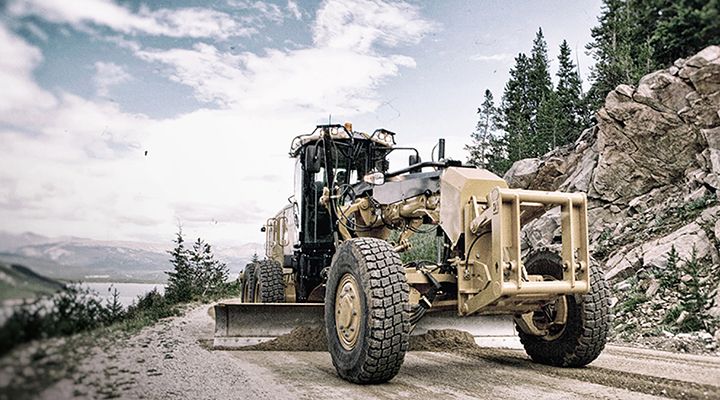
Your motor grader doesn’t just ride on tires. It reacts to them. Pressure changes can shift grade accuracy. A stiff ride can wear you out. Conditions ranging from dry “potato dirt” to wet shot rock can make the same tire behave very differently.
If you’re comparing machines or deciding how to spec your next grader, understanding your tire options up front pays off. Your tires affect more than traction — choosing the right setup can also improve accuracy, reduce fatigue and keep you consistently on grade.
Here’s a simple breakdown of the major tire types, what makes them different and what to think about before you buy a grader or choose a tire package for the work you do.
Bias Vs. Radial: Two Tire Types, Two Very Different Rides
Motor graders typically run one of two tire constructions: bias or radial. Both work — but they work differently, and those differences show up in how the machine handles, floats and responds to uneven ground.
Bias Ply Tires: Solid, Stable And Budget-Friendly
Bias tires are built from multiple nylon plies laid at an acute angle across the tire. Some designs add fabric or steel breakers under the tread for extra reinforcement, and they use one to four bead bundles per side.
Where bias tires shine:
- The multi-ply sidewall creates a stiff, stable profile — a setup that may feel more planted when you’re working slopes, cutting shoulders, running near obstacles or putting a steady side-load on your grader. In certain applications, that stiffness helps the tire hold its shape in uneven terrain. Also, because bias tires generally cost less than comparable radials, they’re often the budget-friendly choice for motor graders running in predictable, lower-speed applications.
Limitations:
- Bias tires may ride stiffer and build more heat at higher speeds, and they typically don’t offer the same flexibility or flotation as radials. Long grading days may feel rougher, and soft ground may require more attention.
Radial Tires: Smoother Ride, Better Flotation, More Control
Radials are built differently. A single ply of high-strength steel cords runs at 90 degrees to the tread centerline, reinforced by two to six steel belts beneath the tread. That structure flexes more freely, especially through the sidewall.
What that means in the seat:
- A more flexible casing sheds heat better, even at high speeds or on long, continuous passes. The tread surface is less prone to cutting and holds up well in rocky conditions. More steel in the tread helps resist punctures. Because the tire conforms more easily to the ground, traction improves on most surfaces.
- For operators, the biggest difference is comfort and control. Radials float better in soft material, cushion the ride and help the grader stay planted — all of which reduces fatigue and supports more accurate, consistent grading.
Limitations:
- Radials generally come with a higher purchase price, and their added flexibility can feel a little softer when you're working steep slopes or putting heavy side pressure on the moldboard.
Beyond Construction: Don't Overlook Load Rating & Pressure
Once you’ve picked your tire type, there are two other factors that affect how your grader performs: load rating and inflation pressure. They go hand in hand, and both have a direct impact on accuracy, handling and tire life.
Every tire has a maximum load capacity based on its construction and proper pressure. To choose the right tire, you need your grader’s full operating weight, including field-installed attachments like snow wings or front-mounted plows.
The safe choice is simple: pick a tire that's load rating exceeds your machine’s maximum single-tire load. Anything less invites trouble. Overloading can lead to poor performance, accelerated wear or, in the worst cases, punctures or full blowouts.
Pressure ties into that same equation. Because inflation affects load capacity, small pressure changes can shift how your grader sits, reacts to the ground and holds grade. Under-inflate or over-inflate, and you may see those differences show up right in your cutting pass.
Right tire. Right load rating. Right pressure. That’s the combination that keeps performance predictable and grading more accurate.
No Single Tire Handles Every Condition — And That’s Okay
Motor grader work is rarely predictable. You might spend the morning floating over loose dirt and the afternoon chewing through wet shot rock. Temperature, speed, slopes, moisture and operator technique all affect how a tire performs and how long it lasts.
That’s why no single tire fits every situation. The key is choosing a tire that fits the work you do most and knowing how its construction and pressure affect your grader when conditions shift.
Start Here To Set Your Grader Up For Success
The right tires do more than find traction. They steady the machine, help you hold grade as conditions shift and reduce fatigue over long days.
Before you buy a machine or choose a tire package, make sure you consider matching tires to your material and work style. Then, your local Cat dealer can help you dial in load ratings and pressure for your specific setup.
*Applies to common repairs. Contact your local Cat dealer for major repair commitment and Terms & Conditions.
Related Articles
You’re here to get ideas to grow your business. Read on for machine insights and expert tips and tricks to get more out of every job.
-
5 Ways to Get a Handle on Your Repair Costs
Just because repairs are inevitable, doesn’t mean they have to break the bank. Here are five things you can do to keep your repair costs under control.
Learn More -
Rolling Resistance Factors
You can use rolling resistance factors to help you identify which equipment will be most efficient on your worksite.
Learn More -
Stable Blade: Fast, Accurate Grading with Less Rework
Think about the time and money you’ve wasted repairing the damage caused by a bouncing motor grader blade. Now there’s a way to avoid that costly rework. Get Stable Blade technology, a Cat® exclusive, available on M Series 3 graders or as a retrofit on older M Series models.
Learn More
Your Business
 North America – English
Caterpillar Brands
- Caterpillar.com
- My Marketing Preferences
- Site Map
- Cookie Settings
- Legal
- Privacy
- Do Not Sell or Share My Personal Information
- Accessibility Statement
- US-English
- © 2026 Caterpillar. All Rights Reserved.